Offbeat Travel · Meghalaya

Meghalaya, the Abode of Clouds

A 7-day road trip into Khasi villages, living root bridges, sacred groves, and the mist-wrapped heart of India's most extraordinary hill state.

Duration 7 Days
Grade Moderate
Best Season Oct–Apr
Region East Khasi Hills

India's Most Extraordinary Hill State, Done Right

Meghalaya, the Abode of Clouds, is one of India's most extraordinary landscapes. But the version most travellers see barely scratches the surface: a quick drive to Shillong, a selfie at a waterfall, a night in a hill station hotel. This 7-day road trip goes deeper. It follows back roads into Khasi villages where the matrilineal clan still governs land and name. It descends into gorges laced with ancient living root bridges grown over centuries from rubber fig trees. It walks the edge of bamboo cliffs above rushing rivers. It sits by the world's cleanest village stream at dusk.

The sacred groves of Mawphlang, a 300-year-old ecosystem protected by Khasi law and forest spirits, stand in extraordinary contrast to the hustle of Shillong just an hour away. This is Meghalaya at its most honest: misty, green, layered, and deeply alive.

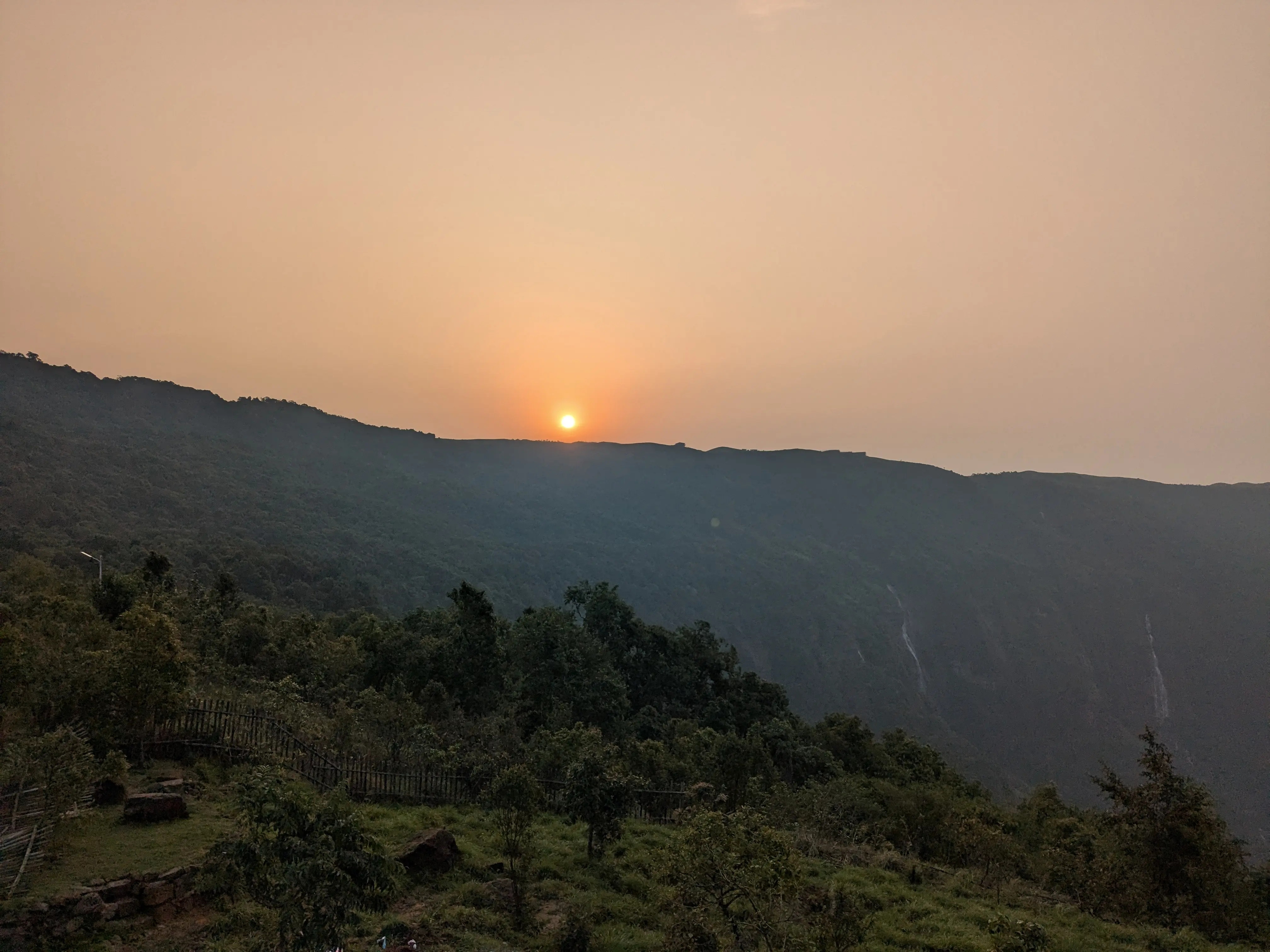
Misty canopy of Meghalaya's ancient forest

What Defines This Journey

Shillong, the Scotland of the East

A city of pine-covered ridges, colonial architecture, Ward's Lake, and the chaotic warmth of Police Bazaar. A perfect one-night introduction to Meghalaya before you leave the roads behind.

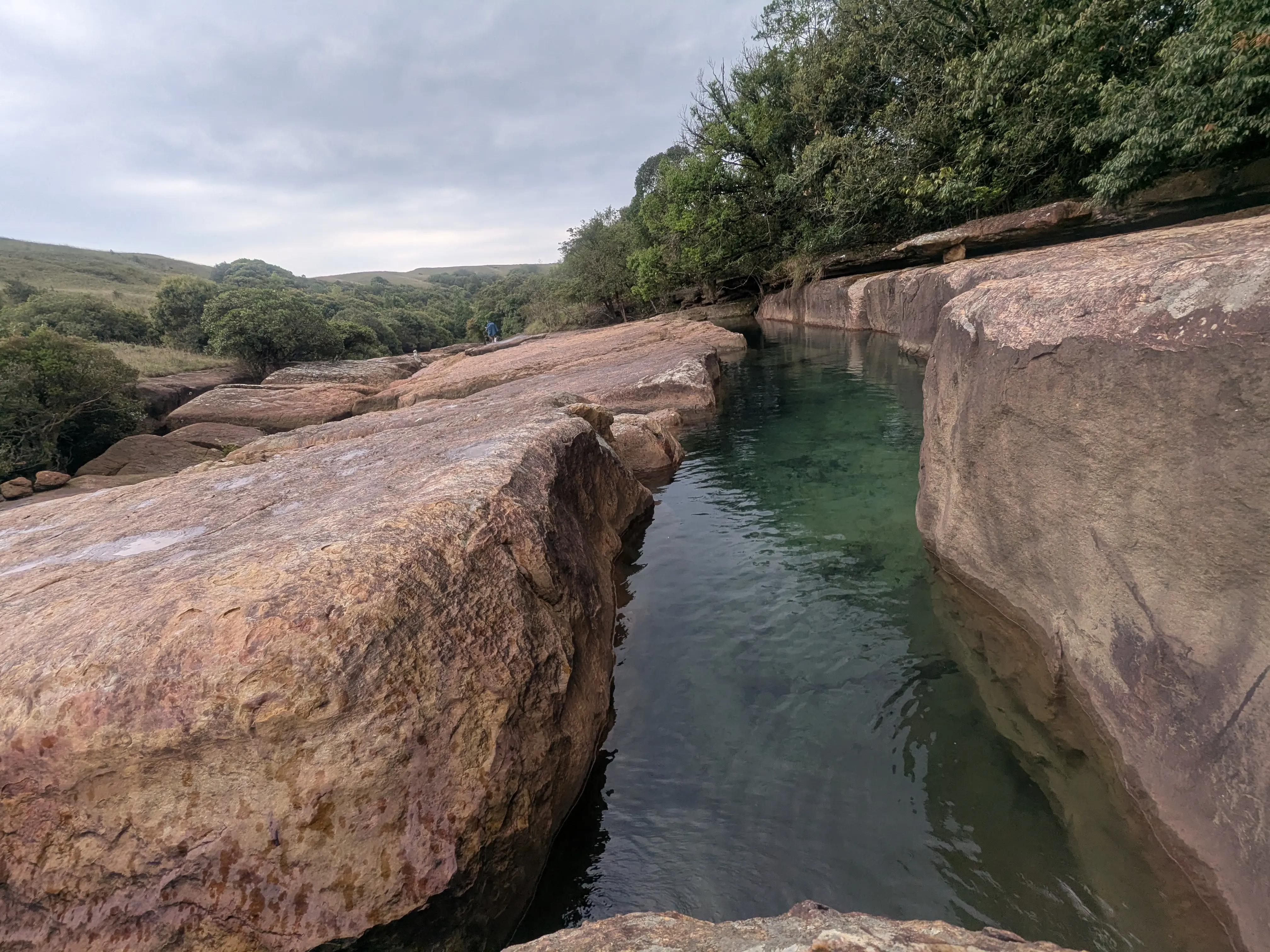
Mawlyngbna Canyoning

A wild adventure village in the East Khasi Hills where you descend water chutes, cliff-jump into clear jungle pools, and swim through rock passages. One of the most exhilarating experiences in Northeast India.

Mawphlang Sacred Grove

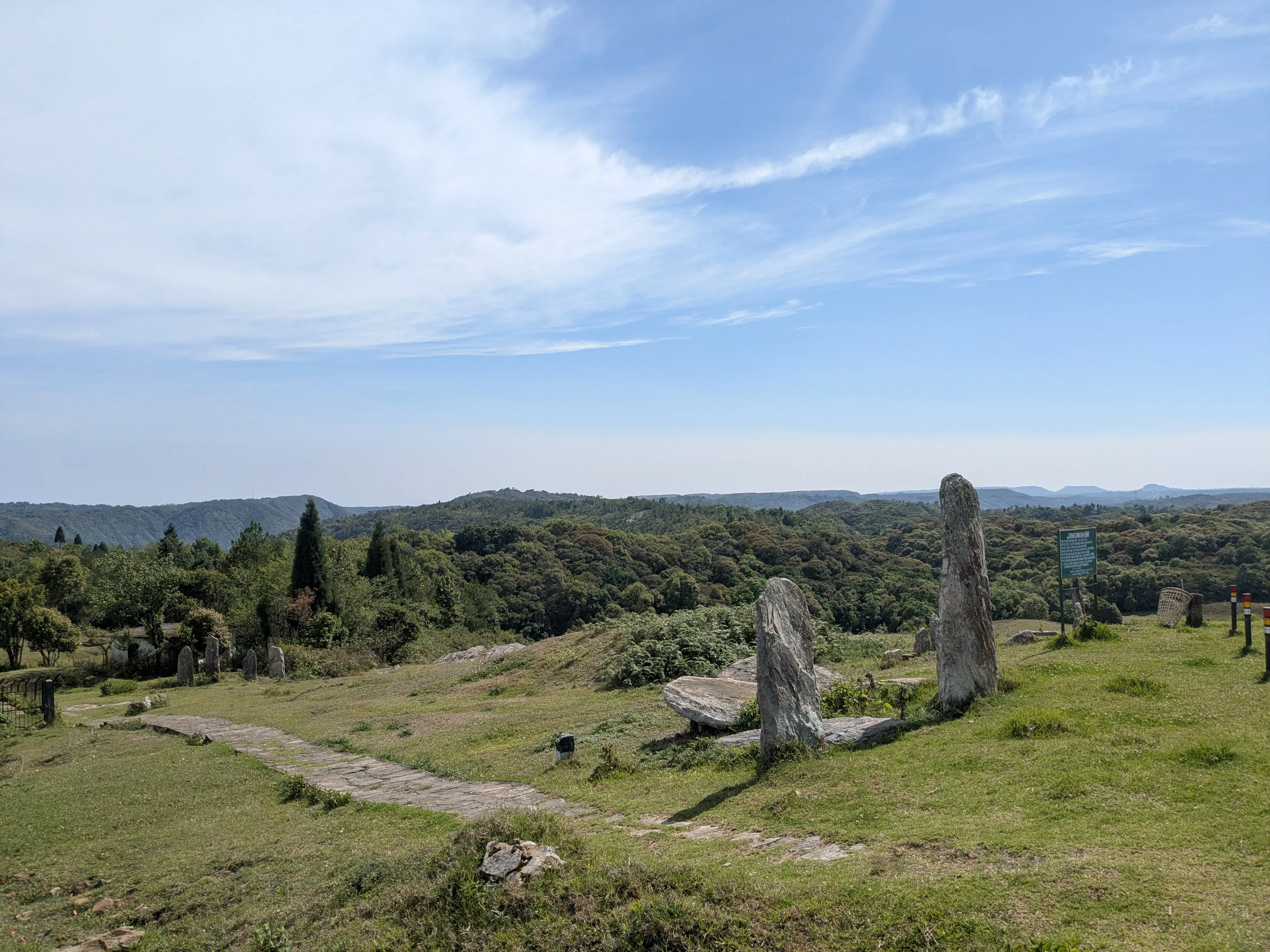
One of Meghalaya's oldest and most biodiverse sacred groves, protected for over 300 years by the Khasi law of the Nongkynmaw clan. Not a leaf, stone, or twig may be removed. The forest feels ancient, dense, and alive with something beyond ecology.

Mawryngkhang Bamboo Trek

A thrilling trail from Wakhen village that crosses a bamboo suspension bridge, skirts cliff edges on bamboo walkways above the Umrew River gorge, and climbs to a 100-metre rock pinnacle with sweeping views. Not for the faint-hearted.

Rangthylliang Root Bridges

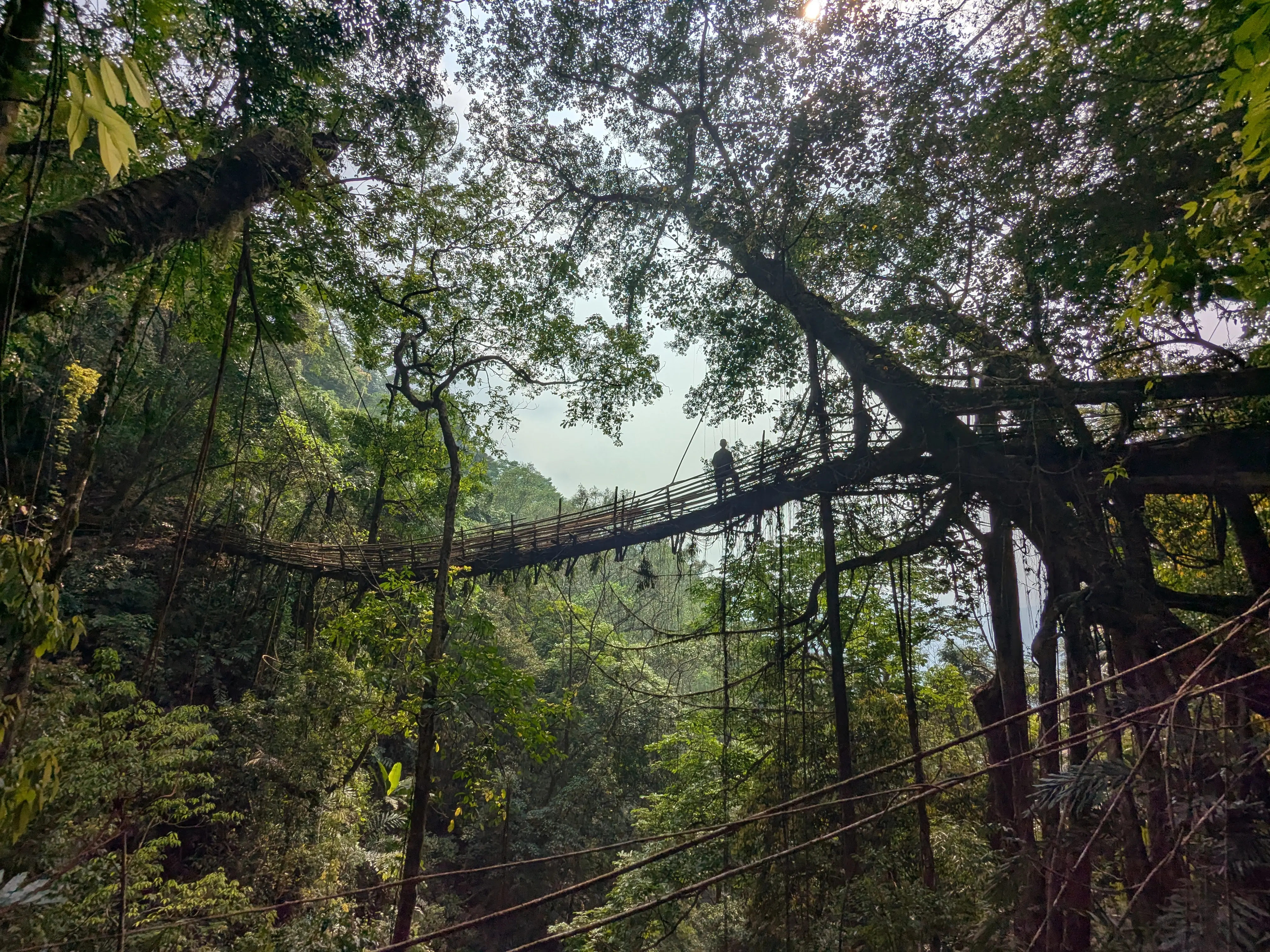
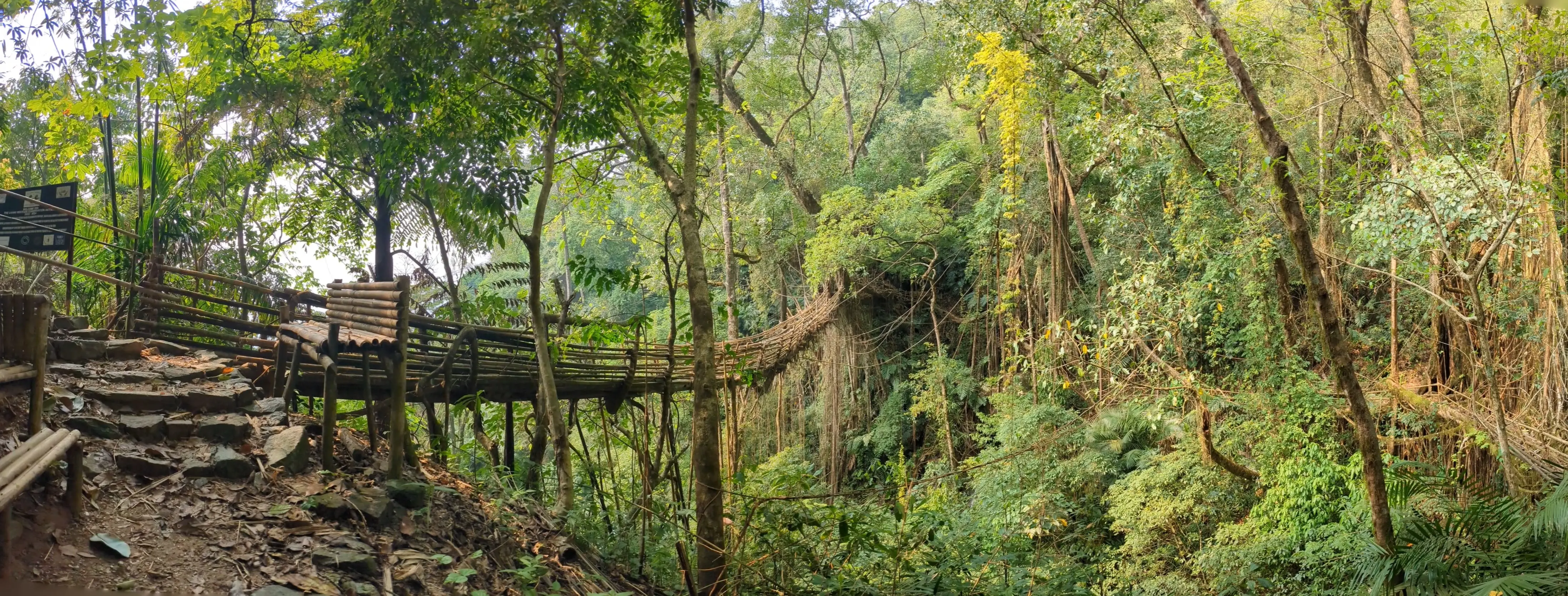
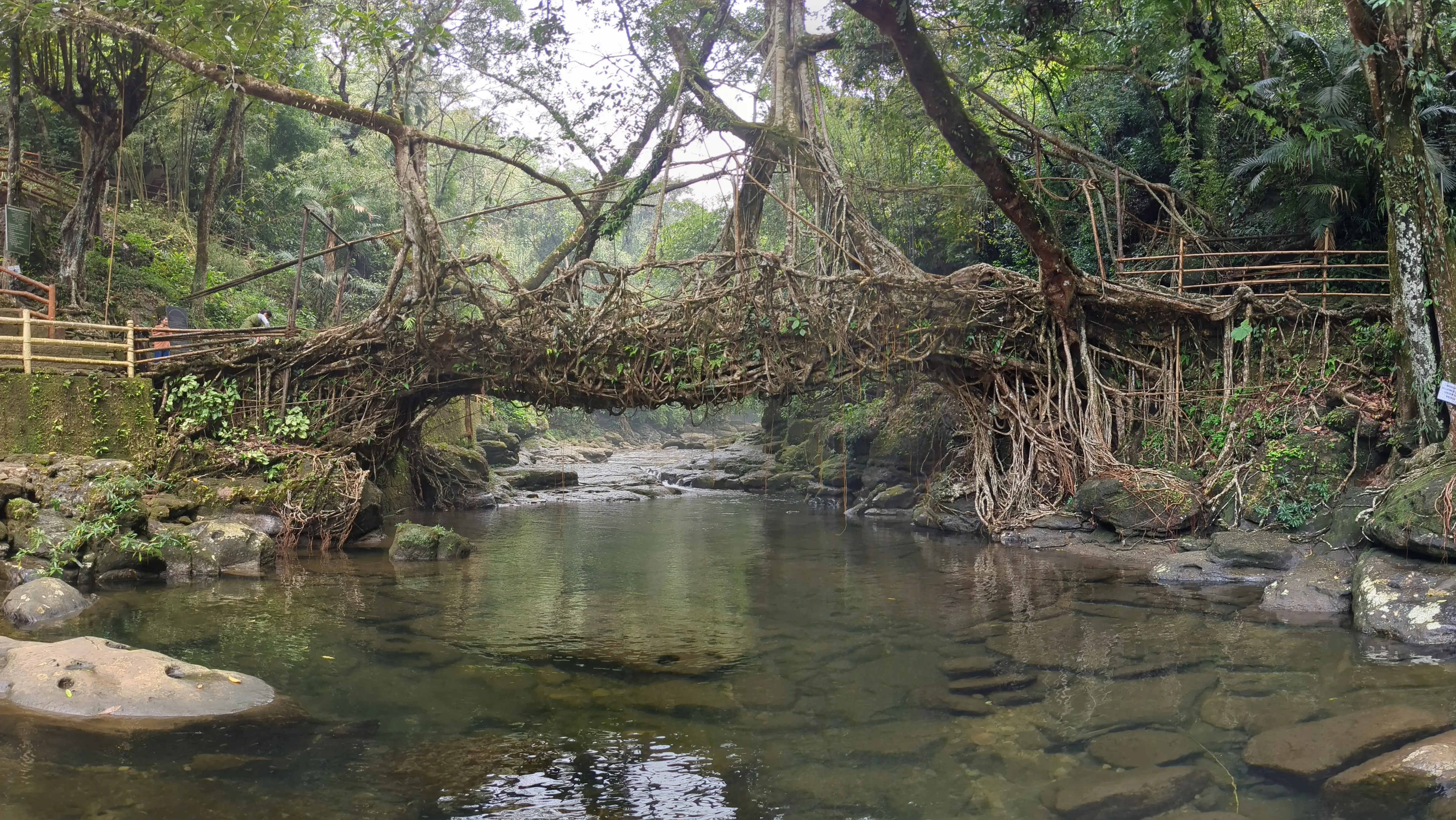
The highest concentration of living root bridges in Meghalaya, in a village barely touched by tourism. Grown by Khasi communities over generations by training rubber fig tree roots across streams and gorges. A feat of ecological engineering unlike anything in the world.

Robin's Nest, Umiam Lake

A final night at this much-loved lakeside stay above the turquoise waters of Barapani reservoir. Sunrise over the lake with pine-covered hills reflected in the water is one of Meghalaya's defining images.

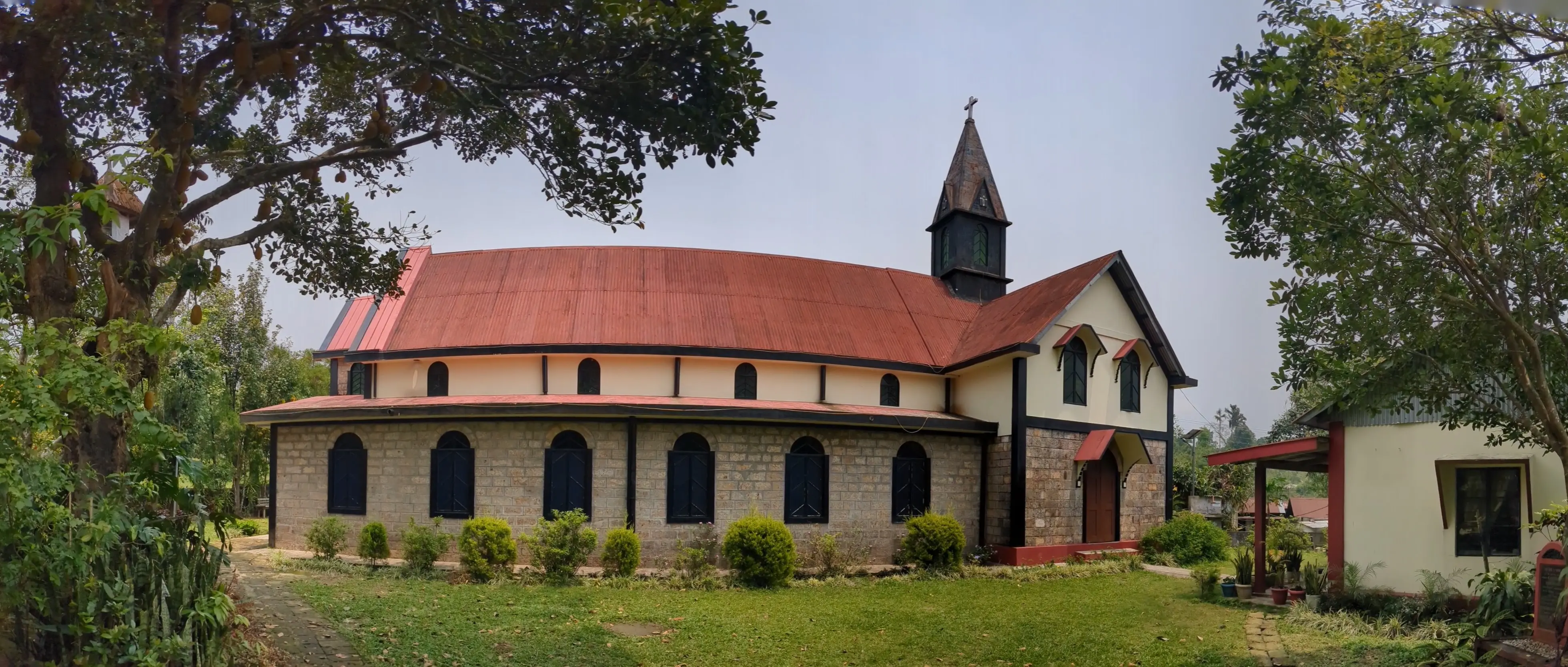
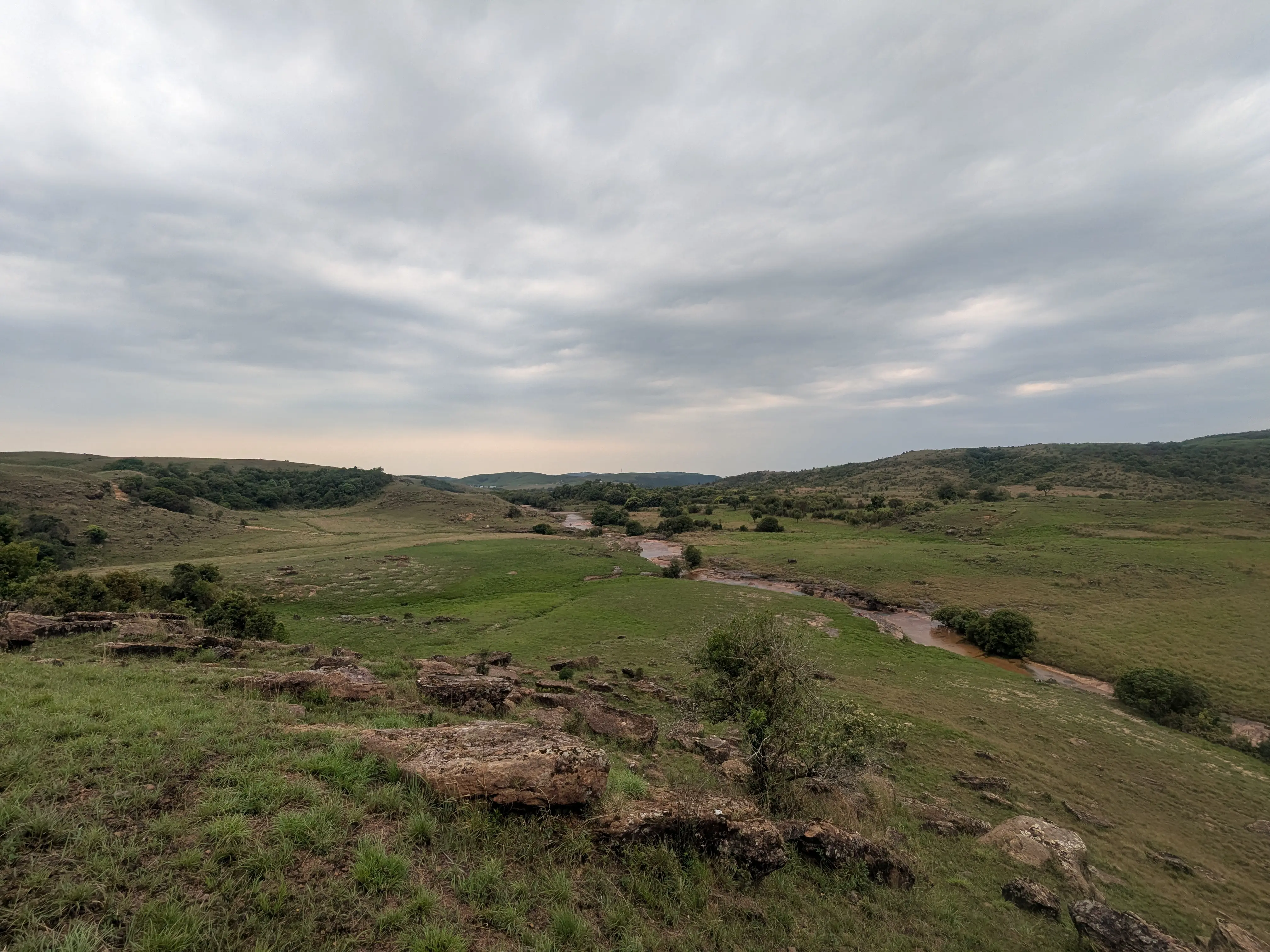
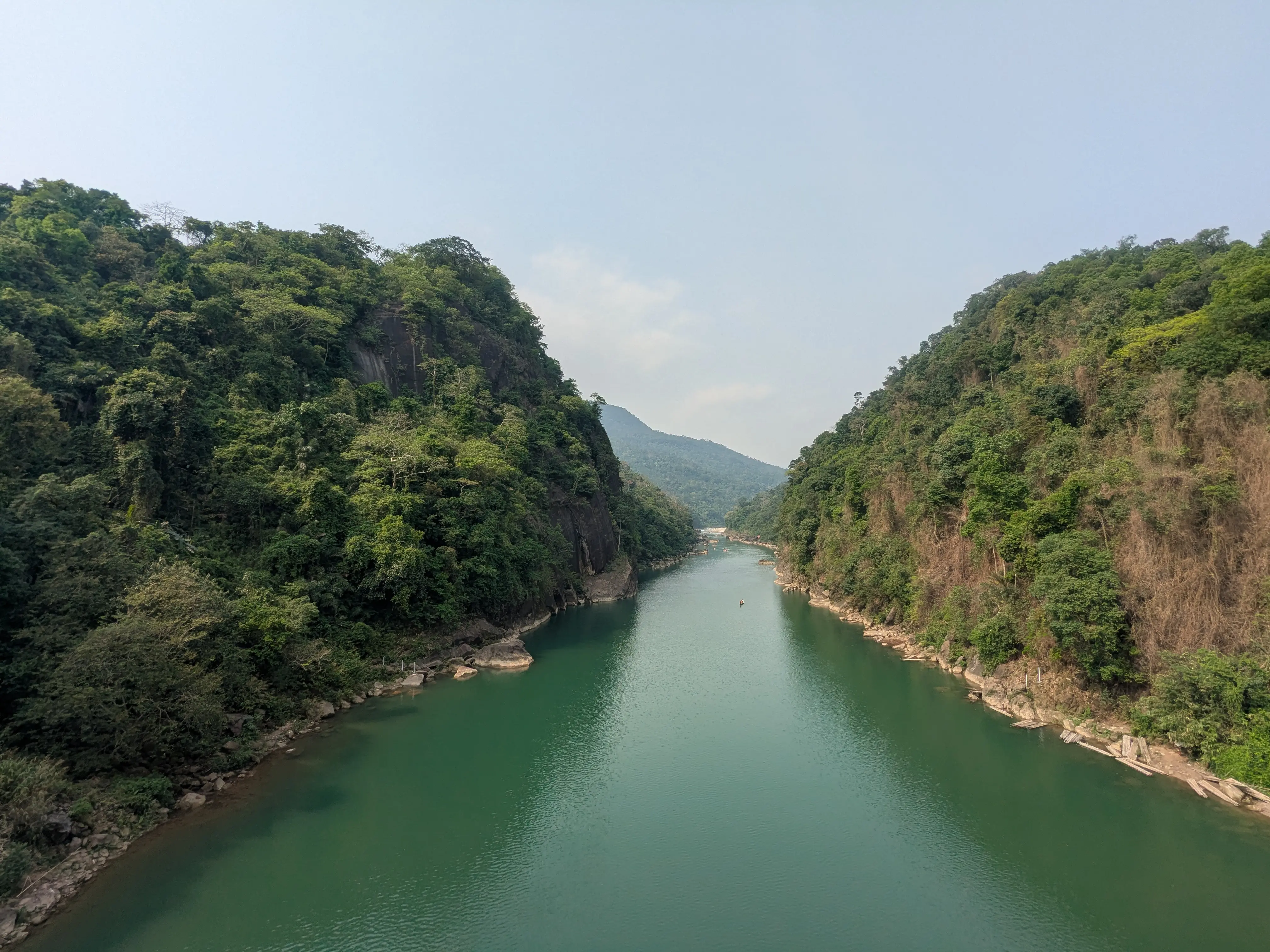
Misty green hills of the Khasi countryside

Day by Day

Seven days from Guwahati through the Khasi Hills, canyons, sacred groves, and root bridges of Meghalaya.

Day1

Guwahati to Shillong

Pick up your vehicle in Guwahati and head south on NH6 into Meghalaya. The road climbs quickly into the Khasi Hills, rice paddies giving way to pine forests and mist-wrapped ridges. En route, stop briefly at Umiam Lake, a vast turquoise reservoir ringed by green hills, for your first taste of Meghalaya's particular quality of light. Arrive in Shillong by early afternoon. Spend the rest of the day at your own pace: the colonial-era Ward's Lake and its manicured gardens, the Cathedral of Mary Help of Christians, and the vibrant chaos of Police Bazaar. In the evening, find a local restaurant and try Jadoh, Khasi rice cooked with pork, and a glass of Chuak, the traditional rice beer. Overnight: Shillong.
Day2

Shillong to Mawlyngbna

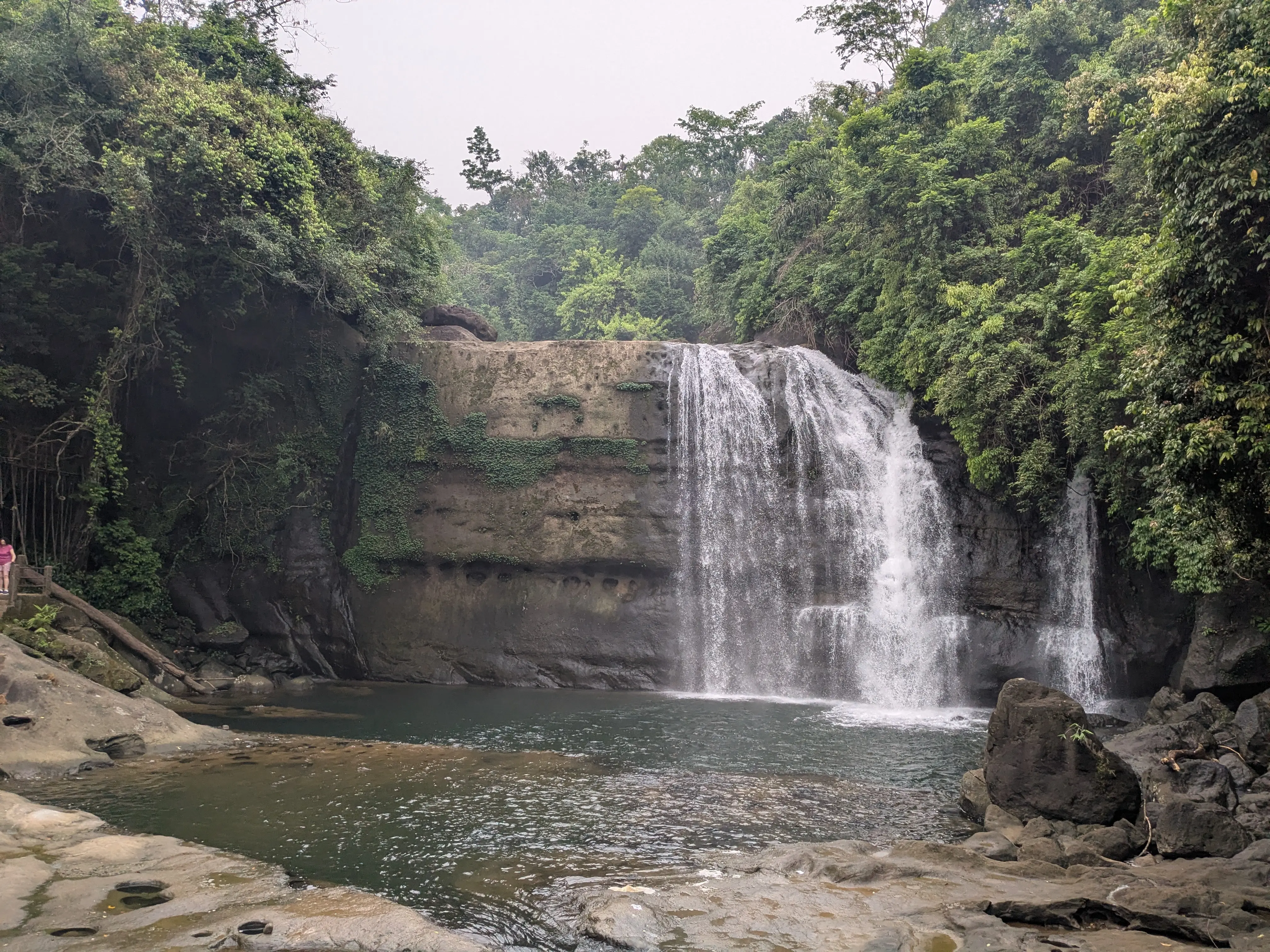
An early start from Shillong for the three-hour drive southeast to Mawlyngbna, a village that has quietly become one of the most exciting adventure destinations in the Northeast. The drive itself is beautiful, past Smit, the traditional seat of the Khasi Syiemship, and through a landscape of rolling meadows and small market towns. Mawlyngbna sits at the edge of the East Khasi Hills plateau, where the land drops sharply into the Bangladesh plains. The effect is dramatic, with clouds forming and dissolving against the cliff faces below. The afternoon is given over to canyoning: descend into jungle ravines on rope, slide down natural water chutes, leap from rock ledges into deep forest pools, and swim through passages carved by centuries of water. The guides are local and excellent. In the evening, a walk through the village and a meal with your hosts as the mist comes in off the plateau edge. Overnight: Mawlyngbna.

Day3

Mawlyngbna to Pynursla via Mawphlang Sacred Grove

This is one of the great days of the journey. Drive west from Mawlyngbna towards Mawphlang, a name that carries considerable weight in the Khasi world. The Sacred Grove here is one of the oldest and largest in Meghalaya, a patch of ancient forest protected for over three centuries by the law of the Nongkynmaw clan. You enter with a mandatory local guide. The forest is extraordinarily dense and layered, old-growth trees dripping with moss and orchids, a floor of roots and leaf litter that has never been cleared, the smell of deep earth and rain. Nothing may be removed: not a leaf, not a stone, not a fallen branch. The grove is considered alive with the presence of the Ryngkew Basa, the forest deity. After the grove, continue to Langkawet Village Retreat near Pynursla, your base for the next two nights. Arrive by evening and settle into the pace of this quiet Khasi countryside. Overnight: Langkawet.

Day4

Mawryngkhang Bamboo Trek

Drive to Wakhen village, the trailhead for what is one of the most unusual and physically demanding treks in Meghalaya. The Mawryngkhang trail begins with a descent through pine and broadleaf forest to the banks of the Umrew River, where a bamboo suspension bridge crosses the gorge. From here the path follows the cliff edge, bamboo walkways pinned against sheer rock faces, ladders bolted into the stone, the river far below. The route climbs steadily to Mawryngkhang Rock itself, a 100-metre sandstone pinnacle with views in every direction: forested hills, the deep slash of the gorge, and on a clear day, the plains of Assam to the north. The full return trek takes around four hours and requires a reasonable head for heights. Return to Langkawet by evening, well-earned rest with dinner at the retreat. Overnight: Langkawet.

Day5

Rangthylliang Root Bridges Trek

The living root bridges of Meghalaya are one of the natural wonders of the subcontinent, but the famous double-decker at Nongriat near Cherrapunji now draws thousands. Rangthylliang is a different matter entirely. This village in the East Khasi Hills sits at the heart of what may be the densest network of root bridges anywhere in Meghalaya, yet sees a fraction of the visitors. The trek from Rangthylliang descends through dense subtropical forest on ancient, overgrown paths to the village of Mawkyrnat, crossing bridges at different elevations, including one that is reportedly among the highest in the state. The trail passes through a landscape that feels genuinely undiscovered: no stalls, no tea shops, just forest and the sound of water. Carry all your food and water. Allow five to six hours for the full circuit. Return to Pynursla in the late afternoon. Overnight: Langkawet.

Day6

Pynursla to Umiam Lake, Don Bosco en route

A gentler day to ease out of the hills. Drive north from Pynursla, passing back through Shillong. If the morning allows, stop at the Don Bosco Centre for Indigenous Cultures, a remarkable seven-storey museum on the edge of the city dedicated to the tribal communities of Northeast India. The collection spans masks, textiles, musical instruments, oral histories, and objects of daily life from dozens of communities across the eight sister states; the rooftop skybridge offers views across Shillong. Allow two to three hours. From Shillong, continue north to Umiam Lake, the great turquoise reservoir also known as Barapani, created in 1965 by damming the Umiam River and now one of Meghalaya's most beautiful landscapes. Check in to Robin's Nest, a small and well-loved lakeside stay. The rest of the day belongs to the lake: a walk along the water's edge, the sunset over the pine-covered hills, a quiet dinner. Overnight: Umiam Lake.

Day7

Umiam Lake to Guwahati, Departure

Set your alarm for the sunrise. In the early morning, the mist lies low on Umiam Lake and the reflection of the hills in the still water is close to perfect. A morning walk along the shore, a slow breakfast at the lake, and a reluctant departure. The drive to Guwahati takes around an hour and a half on a good road, enough time to absorb the week before the plains return. Drop the vehicle at Guwahati Airport or the railway station for onward journeys.

Dense subtropical forest in the East Khasi Hills

Plan Around These

Timing your visit around a festival transforms this journey into something unforgettable.

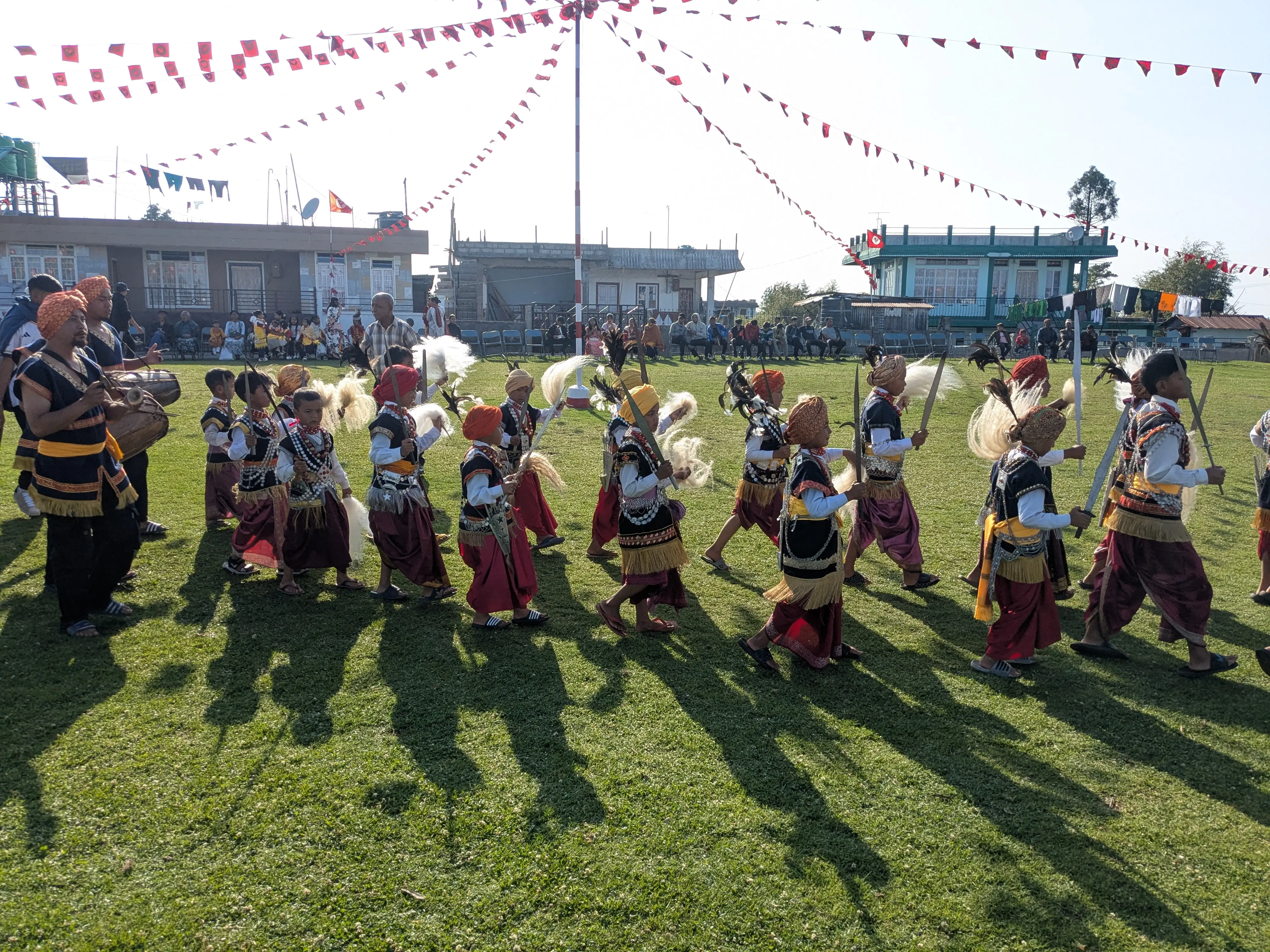
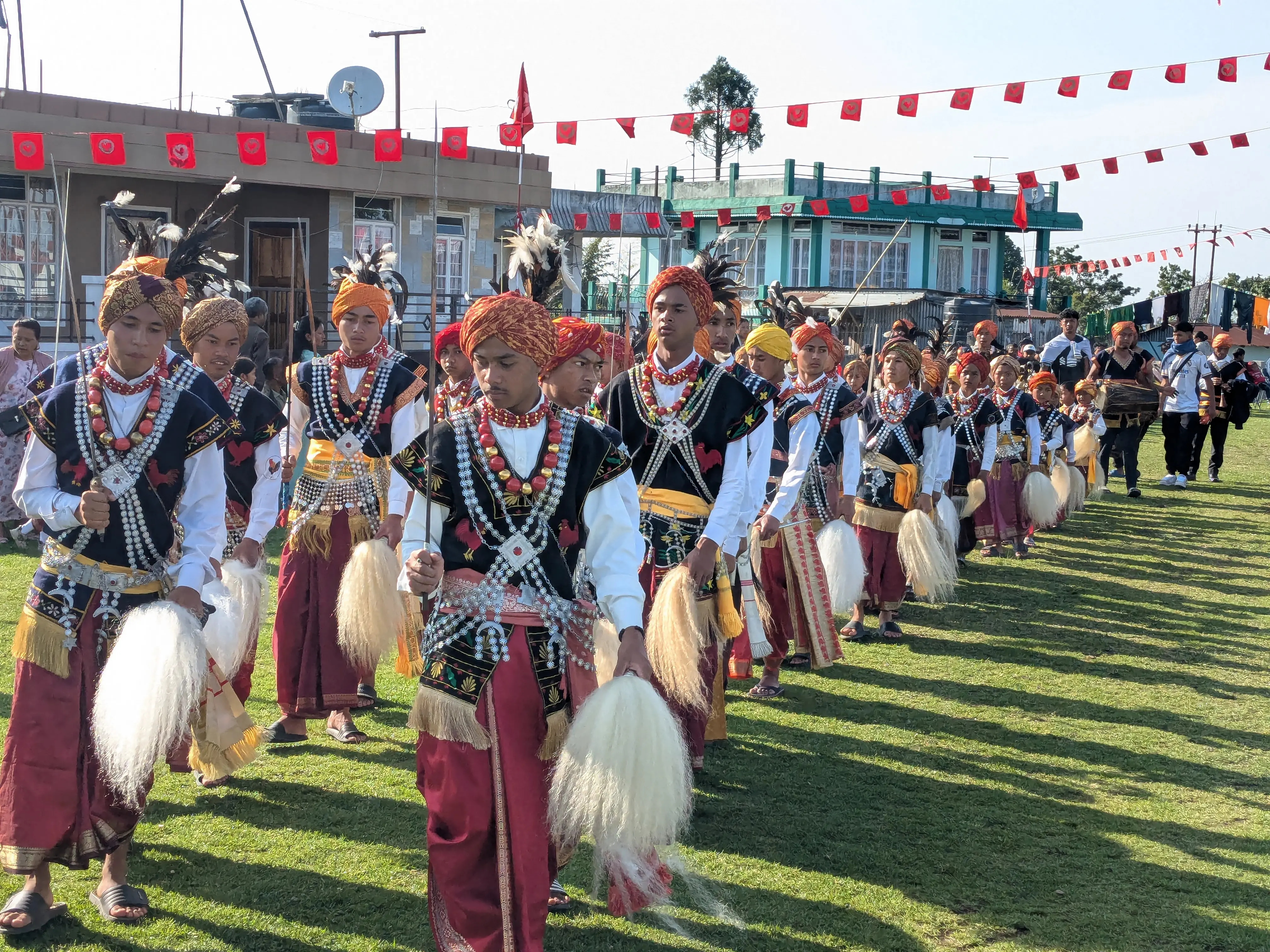
Nongkrem Dance Festival, Smit — November

The most important festival of the Khasi people, held at Smit, the seat of the Syiem of Khyrim, just a short drive from Shillong on your Day 2 route. Young women in elaborate silver jewellery and silk perform the Ka Shad Nongkrem, a thanksgiving dance to Ka Blei Synshar, the supreme deity. Men dance on the outer circle with swords and fly-whisks. One of the great ceremonial moments in the Northeast.

Shad Suk Mynsiem (Dance of the Joyful Heart) — April

A spring thanksgiving festival held annually at Weiking ground in Shillong. Unmarried Khasi women in full ceremonial dress, silk patins, gold crowns, and silver jewellery, perform a stately, deeply elegant dance. Men dance on the periphery. It is open to all visitors and is the most accessible of Meghalaya's major festivals.

Cherry Blossom Festival, Shillong — November

When the Prunus cerasoides blooms across the Khasi Hills, Shillong holds a three-day festival celebrating the blossom with music, food, and cultural events at Polo Grounds. The pink bloom across the hills coincides with Nongkrem Dance, making late November an exceptionally rewarding time to visit.

Ready for Meghalaya?

A 7-day immersion into root bridges, sacred groves, canyoning, and the matrilineal heart of the Khasi Hills. Get a detailed itinerary and a personalised cost estimate.